
Your Lawyer for International Labour Law
An employment contract involving another country, remote work from abroad, or a cross-border termination can raise many questions. Whether you are an employee or a private employer, you need clarity on your rights, obligations, and deadlines. We assess cases involving Germany and determine what additional advice on foreign law may be required. This enables you to plan your next steps on a sound legal basis.
Employment Contracts: Which Law Applies Across Borders?
For employment contracts involving another country, the Rome I Regulation generally determines the applicable law by reference to the country in which the employee habitually carries out their work, where the Regulation applies and no valid choice of law overrides that starting point. Nationality is not decisive. Under Article 8, a choice of law must not deprive employees of the protection afforded by mandatory provisions of the law that would otherwise apply. Overriding mandatory provisions under Article 9 must also be considered. The question of which courts have jurisdiction is a separate matter.
As an employee, you should not rely solely on the choice of law in your contract. The country in which you habitually work, or from which you ordinarily carry out your duties, is also relevant. We review your work arrangements, periods of assignment, and contractual terms to determine which legal protections apply. A foreign employment contract does not automatically mean fewer rights. Whether annual leave, remuneration, or protection against dismissal is affected requires a case-specific comparison.
As an employer, you should ensure that your employment contract templates reflect the actual working arrangements. Choosing German law does not exclude the application of mandatory foreign requirements. We review your contractual structure, place of work, and planned cross-border assignments from your company’s perspective. We also identify which provisions require separate legal advice in the relevant country. Clearly defined responsibilities, remuneration terms, and areas of authority help prevent inconsistencies and disputes later on.
Before signing an employment contract, prepare an overview of the contracting parties, actual places of work, assignment periods, and the organisational centre of your activities. Gather all versions of the contract and any amendments or addenda. Have the choice-of-law and jurisdiction clauses assessed separately before signing a clause or incorporating it into an employment contract template as an employer.
Frequently Asked Questions About Employment Contracts and Choice of Law
Does German Employment Law Always Apply to German Employees?
No. Under Article 8 of the Rome I Regulation, in the absence of a choice of law, the law of the country in which or from which you habitually carry out your work generally applies. Your nationality does not determine the law governing your employment contract. Nor does an employer’s registered office in Germany, by itself, necessarily mean that German employment law applies.
Can a Choice of Law Exclude Mandatory Employee Protections?
No. A choice of law cannot deprive you, as an employee, of the protection afforded by mandatory provisions of the law that would apply in the absence of that choice. As an employer, you must also take these protections into account when drafting employment contracts. The relevant provisions must be compared on a case-by-case basis to determine which mandatory protections apply.
What Rules Apply When Work Is Regularly Performed in Multiple Countries
The first step is to determine whether a country can be identified as the place in or from which the employee habitually carries out their work. Only if this cannot be established does Article 8(3) refer to the place of business through which the employee was engaged. Under Article 8(4), the law of another country may apply if the employment contract is more closely connected with that country.
Does a Fixed-Term Assignment Abroad Immediately Change the Applicable Employment Law?
Under Article 8 of the Rome I Regulation, a temporary assignment abroad does not change the country in which the employee habitually works. However, the actual circumstances matter, not merely the label “secondment.” Additional mandatory employment conditions in the host country may still apply.
What Are Overriding Mandatory Provisions Under Article 9 of the Rome I Regulation?
These are mandatory provisions considered crucial to safeguarding a country’s public interests. They may apply irrespective of the law governing the contract. However, not every mandatory employment law provision qualifies as an overriding mandatory provision. Different conditions apply to provisions of the forum country and those of the country where contractual obligations are to be performed.
Does a German Court Always Apply German Employment Law?
No. Court jurisdiction and the applicable law are determined separately. A German court may be required to apply foreign contract law. Conversely, choosing German law does not establish that German courts have jurisdiction. Both issues should therefore be assessed at an early stage.
Secondments and Remote Work:
Clarifying the Legal Requirements for Working Abroad
International assignments and remote work abroad require careful assessment before work begins. The duration of the assignment, the place of work, and the specific activities determine which requirements are relevant. These may include notification obligations and mandatory employment conditions in the host country, such as rules on remuneration and rest periods. Social security, tax, and immigration law must be assessed separately from the law governing the employment contract. A short business trip or approval to work remotely does not replace this assessment.
As an employee, you should agree on any work abroad with your employer in advance. Set out working hours, availability, expenses, and return arrangements in writing. An A1 certificate confirms which country’s social security legislation applies; it is not a work permit. You are not automatically covered by your home country’s social security system. You should also have the scope of sickness and accident benefits, as well as any potential gaps in insurance coverage, reviewed separately.
As an employer, you need a robust process for approvals, notifications, and payroll administration. When hiring internationally, check before employment begins whether a residence permit and work authorisation are required and, if so, whether they have been obtained. Even short-term assignments abroad can trigger legal obligations; there is no general 183-day exemption. We assess your employment law requirements and coordinate any necessary country-specific legal and tax advice with you separately.
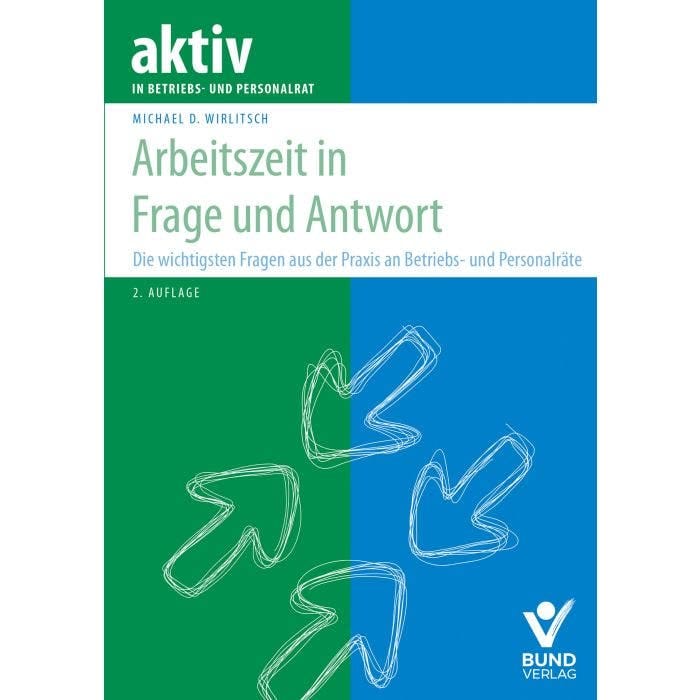
Working Hours: Questions and Answers
Supplementary guidance on German working time law for employees and on employers’ workplace obligations. This is not a specialist guide to foreign law and does not address conflict-of-laws questions, namely which law applies. It does not replace a case-specific assessment of your international assignment.
View the Book at the Publisher ↗Record the country, place of assignment, start date, end date, and duties in writing. Assign a responsible person to each area requiring review: employment conditions, social security, immigration and notification requirements, and tax and payroll administration. Set out arrangements for the start and end of the assignment, allowances, and expenses. If the location, duration, or nature of the work changes, review the relevant approvals again.
Frequently Asked Questions About Secondments and Remote Work Abroad
Can I Work Abroad Simply Because My Employer Has Approved Remote Work?
General approval for remote work does not automatically authorise you to work from any country. As an employee, you should agree on the specific location in advance. As an employer, you should assess local legal requirements, data protection, and the implications for insurance and payroll before granting approval.
Which Employment Conditions Apply to a Posting Within the EU?
Where EU posting rules apply, mandatory requirements of the host country may cover matters such as remuneration, maximum working hours, rest periods, and annual leave. More favourable employment conditions remain protected. Additional rules may apply to longer postings. Notification requirements must be checked separately for each country.
What Does an A1 Certificate Confirm — and What Does It Not Confirm?
Under the applicable social security coordination rules, an A1 certificate confirms which country’s social security legislation applies. It does not replace any required work permit, posting notification, or tax assessment. Whether the situation constitutes a posting or regular work in multiple countries must be assessed separately
Is Spending Fewer Than 183 Days Abroad Always Problem-Free?
No. There is no general 183-day exemption. Tax treaties make the application of such rules subject to additional conditions and different reference periods. Tax and payroll obligations may arise even during shorter stays abroad. Employment law and immigration law are governed by separate rules.
Does Social Security Coverage in Your Home Country Automatically Continue?
No. This depends, among other factors, on the countries involved, the nature of the work, and the assignment arrangement. EU social security coordination rules, their respective extension to the EEA and Switzerland, and agreements with non-EU countries must be distinguished. Not every agreement covers all branches of social security, so any gaps in coverage should be assessed separately.
What Needs to Be Clarified Before an International Hire Begins Work?
Check whether the individual requires a residence permit or work authorisation for the specific role and whether the necessary authorisation is in place. Employees should obtain the required documents in good time, while employers must verify the individual’s right to work before employment begins. A signed employment contract alone is not sufficient.
Dismissal and Employment Claims:
Assess Jurisdiction, Applicable Law, and Deadlines
In cross-border employment disputes, court jurisdiction, applicable law, and deadlines must be assessed separately. Articles 20 to 23 of the Brussels I Recast Regulation provide specific jurisdictional protections for employees. An employer based abroad therefore does not necessarily have to be sued abroad. Not every jurisdiction clause is binding on employees. A sound legal strategy must also take account of service of documents, translation requirements, and the subsequent enforcement of judgments in the relevant country.
As an employee, you should immediately document receipt of any notice of dismissal and compile a list of outstanding claims. Where Section 4 of the German Protection Against Dismissal Act (KSchG) applies, the general deadline for filing an unfair dismissal claim is three weeks from receipt of the written notice of dismissal. Other countries have different deadlines. Do not wait for negotiations to conclude or for your return to Germany. We review your documents, potential jurisdictions, and the steps required to protect your rights.
As an employer, you should have the grounds for dismissal, formal requirements, applicable employee protections, and proof of delivery reviewed before issuing a notice of termination. When an employment relationship ends, arrangements for repatriation, the cessation of allowances, outstanding remuneration, and social security protection must be addressed separately. Ending an international assignment does not automatically terminate the employment relationship. We assess negotiation and litigation risks with you and identify any need for advice from foreign counsel before binding declarations are made.
As an employee, keep the dismissal notice, its envelope, evidence of receipt, and supporting documents for any outstanding claims. As an employer, compile the relevant decision-making records, evidence of authority to act, and proof of service. Have all deadlines checked immediately. Submitting an enquiry or negotiating with the other party does not preserve a claim deadline; timely filing must be expressly addressed.
Frequently Asked Questions About Dismissal and Cross-Border Employment Claims
Do I Have to Sue a Foreign Employer Abroad?
Not necessarily. Article 21 of the Brussels Ia Regulation provides employees, in particular, with the option of bringing proceedings in the court of the place where they habitually work or where they last worked. If this is in Germany, it may be possible to bring proceedings here – and, under paragraph 2, even against employers from third countries.
Is a jurisdiction clause in an employment contract always binding?
No. Under Article 23 of the Brussels Ia Regulation, derogations are only permissible if they are agreed after the dispute has arisen or if they afford the employee additional avenues of redress. A restriction agreed in advance to a foreign court cannot, therefore, simply override that protection.Nein. Nach Art. 23 Brüssel Ia sind Abweichungen nur zulässig, wenn sie nach Entstehung des Streits vereinbart werden oder dem Arbeitnehmer zusätzliche Klagemöglichkeiten eröffnen. Eine vorab vereinbarte Beschränkung auf ein ausländisches Gericht kann den Schutz daher nicht einfach verdrängen.
In what circumstances may an employer take legal action against an employee?
Within the scope of Article 22 of the Brussels Ia Regulation, proceedings may, in principle, only be brought before the courts of the Member State in which the employee is domiciled. A counterclaim may still be brought in proceedings that are already admissible and pending. Where there is a connection with a third country or an agreement under Article 23, this must be examined separately.
Does the three-week notice period apply to every international termination?
No. If Section 4 of the Employment Protection Act (KSchG) applies, the claim must, as a general rule, be brought within three weeks of receipt of the written notice of termination. Other countries have their own time limits. Outstanding payment claims may also be subject to specific limitation periods. Please clarify the relevant deadlines immediately.
What are the key considerations regarding service of documents and enforcement abroad?
Court documents must be served in accordance with the relevant rules; translations may be required. A judgement does not automatically lead to payment. Recognition, certificates, the place of enforcement and available assets must be examined. EU rules do not apply worldwide without modification.
What should an international separation agreement cover?
Make sure you explicitly clarify the date of termination, return travel and travel expenses, allowances, outstanding remuneration, annual leave and your reference. Social security, residence status and tax implications require separate consideration. Whether you are an employee or an employer, you should not accept a blanket settlement clause without checking it first.

Your client page. A clear advisory brief.
Please let us know the nature of your enquiry, the countries involved, the other party and any relevant deadlines. Please also state whether you are enquiring as an employee or a private employer. Before accepting a case, we will clarify any conflicts of interest, the party to be represented, the scope of our advice and the costs involved. We do not represent both parties in the same dispute.
Any necessary advice on foreign law and from tax experts will be arranged separately. We will discuss with you your requirements, the terms of engagement, responsibilities and any additional costs. We do not undertake to cover all foreign legal systems ourselves. An enquiry alone does not constitute a mandate and does not set any time limit.
Legal notice: This information is intended to provide guidance on cross-border employment relationships involving Germany. It is not a substitute for an assessment of individual cases or for the necessary advice on national legislation or tax matters. The actual nature of the work, the countries involved and the applicable rules in each case are decisive. Please have any upcoming deadlines checked without delay.


